

Most users treat a casino loyalty program like a straightforward point-collection exercise. The mechanics run a lot deeper than that. We have spent years studying how these systems actually function, and the truth is more interesting than the glossy brochures suggest. A well-built loyalty scheme works like a mini-economy inside the platform, with its own exchange rates, rules, and status tiers that influence the value you get. Once you see that hidden structure, the way you approach every deposit, wager, and reward claim changes. Hashlucky Casino's loyalty framework recognizes genuine play patterns, not short-term promo hopping. That changes the math for anyone who aims to play regularly over weeks and months, not just a single session. We will outline exactly what lies under the surface so you can navigate it clearly.
The way a Casino Loyalty Program Actually Works

Nearly every modern casino loyalty program runs on a comp point system tied to real-money turnover. Each time you put a qualifying wager (slot spin, blackjack hand, sportsbook bet), the platform tracks the contribution and transforms it to points at a set rate. That rate is seldom advertised plainly. Slots typically contribute at 100%, meaning a €10 spin counts €10 toward your point accumulation, while table games frequently sit around 10–20%, and certain video poker variants could land at 5%. The difference arises because the house edge on slots generates a predictable margin that operators can share back, whereas low-edge games offer less room for loyalty givebacks. At Hashlucky Casino, the rate structure is visible inside the program terms once you enroll, and we recommend checking it before committing serious volume to any single game category because the accumulation speed can vary dramatically.
Loyalty points pile up unobtrusively in the background, updating almost in real time while you play. Once you reach a minimum redemption threshold (commonly between 100 and 500 points, depending on the platform), https://us.as.com/tikitakas/bruno-mars-supuestamente-debe-50-millones-de-dolares-al-casino-mgm-n/ you can directly convert them into bonus credit, cash, or free spins. Some programs convert automatically on a fixed schedule, but manual redemption usually gives you more control over timing. The real nuance: point value is not static across tiers. A base-level player may get €1 per 100 points. A top-tier member may get €1.20 or even €1.50 for the same amount, a higher rebate on their total action. That tiered rebate structure differentiates casual point collectors from players who treat the loyalty track as a long-term value play. We regularly see players ignore this multiplier effect and leave real money on the table just because they never verified their current tier multiplier.
The Difference Between Wagering and Rewards Contributions
Many players think every euro wagered counts the same. This is not true. The contribution split matters. Wagering requirement contributions determine how fast you clear a bonus, while loyalty point contributions determine how fast you climb tiers and earn redeemable credit. The two systems often use different weighting tables, even inside the same casino. A game that counts 100% toward bonus wagering might only contribute 20% toward loyalty points, or vice versa. Live dealer games are a perfect example. They often contribute well toward loyalty because operators want to reward steady table play. But they might be restricted or weighted at zero for bonus clearing, thanks to higher minimum bets and lower house margins. At a platform like Hashlucky Casino, the dual-table approach means you should check two separate contribution lists if you are simultaneously managing an active bonus and a loyalty tier push. If you rely on a single assumption, you will end up crawling on one track while unknowingly sprinting on the other.
Misconceptions That Set You Back You Actual Money
The biggest myth we come across: loyalty programs reward losers to a higher degree than winners. The truth: comp point accrual is tied to wagering volume, not net outcome. A player who adds €200, runs it up to €2,000 through a hot streak, and rotates that through high-volume slot play will produce vastly additional points than someone who deposits €500 and drops it in five low-turnover bets. The system monitors the handle, not the result. So winning sessions are not loyalty-negative. They are often your biggest point-earning windows because recycled winnings increase your turnover without extra deposit cost. Grasping this eliminates the psychological hesitation some players have about using loyalty features during upswings, as if they are somehow "cheating" the system. They are not. The arithmetic rewards volume, and volume is direction-neutral.
One more costly myth: signing up for a loyalty program always means increased marketing or fewer bonuses. We have reviewed enough programs to say the opposite is usually true. Loyalty-enrolled accounts receive more targeted offers, Hashlucky Casino slot games, not fewer, and the offers are inclined to carry better structural terms because the platform already data on your game preferences and risk profile. Generic blast promos often have the worst wagering multipliers because they have to account for unknown player quality. A loyalty-linked offer is pre-filtered: the operator understands your average bet size, game mix, and deposit cadence, and can determine the bonus accordingly. Opting out to avoid spam usually means trading well-priced, tailored bonuses for occasional one-size-fits-all deals with harsher conditions. If inbox volume is a concern, communication preferences can typically be adjusted without leaving the loyalty track entirely.
Bonus Forfeit Pitfalls to Monitor
One trap that quietly depletes players loyalty points: the forfeiture clause tied to bonus cancellations. Cancel an active bonus, and you usually forfeit any winnings from it. But in some programs, the loyalty points you gained on that bonus-funded wagering get subtracted too. We have witnessed players claim a bonus, clear 80% of the wagering, cancel early, and lose not just the bonus balance but a chunk of tier points already held in their account. The safer sequence is to finish wagering or, if cancellation is necessary, to check the program terms for a specific clause about loyalty clawback. At Hashlucky Casino, the loyalty terms handle this scenario explicitly, and we suggest reading that section before joining any bonus with an uncertain completion timeline.
Why the best Loyalty Programs Are Game-Agnostic
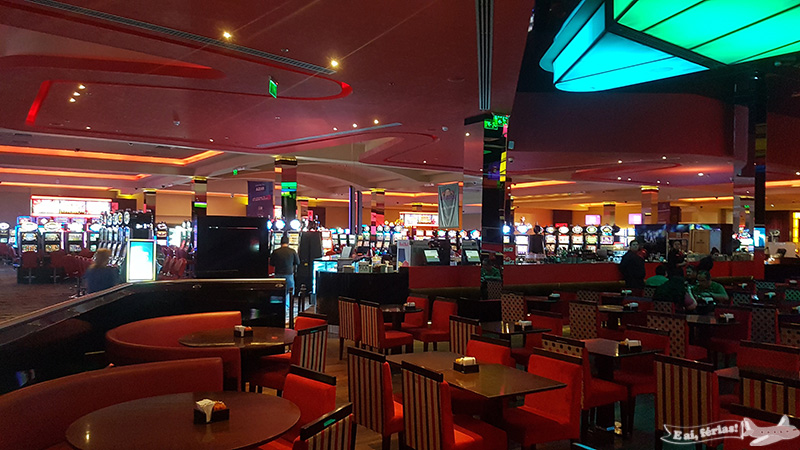
A loyalty program that solely rewards slot play is not a loyalty program at all. It is a slot rebate scheme bearing a fancier label. The strongest programs work across the full product vertical: casino slots, table games, live dealer rooms, and sportsbook markets. Game-agnostic design counts because most players do not restrict themselves to a single product category over a year. Someone might accumulate weekend football accumulators, switch to blackjack midweek, and unwind with bonus-buy slots on a Friday night. If the loyalty system penalizes category switching with wildly different earning rates or outright exclusions, it stops being a cross-platform loyalty layer and morphs into a segmentation tool. We hunt for programs where sportsbook bets earn at a rate reasonably close to slots, typically 50-100% contribution, and where live casino tables sit above 25% rather than near zero.
The real advantage of a cross-vertical program: tier progress stays active even when your gaming tastes shift with the seasons. During major sporting tournaments, a sports-first player can preserve or advance their casino loyalty tier through bet settlement activity alone, without feeling forced to grind slots purely to protect status. That flexibility removes a pain point we hear all the time: players losing a hard-earned tier because life or interest steered them to a different game type for a month. The system design also signals whether the operator views loyalty as a holistic player relationship or a siloed product retention tool. Hashlucky Casino publishes earn rates per product category in a single table. We appreciate that transparency. It lets you model tier timelines under different activity mixes instead of guessing.
The Hidden Value in Tier Frameworks
Multi-tier loyalty programs create artificial breakpoints that alter the economics of your play. A typical structure spans four to seven levels, beginning with a no-status baseline and advancing through labels like Silver, Gold, Platinum, and Diamond or similar designations. Each jump activates a set of benefits, not just a badge. The upgrades that matter most to your wallet: a increased point redemption multiplier, quicker point accrual, and shorter or removed withdrawal processing times. We have observed that the real inflection point often rests at the third tier, the leap from mid-level to upper-mid, where withdrawal priority moves from standard to express and the rebate rate climbs 20–40% over the base. Under that threshold, the program acts as a small cashback conduit. Over that level, the program begins to significantly reduce the friction of transferring money on and off the platform.
Beyond the headline numbers, tier status often unlocks events, tournaments, and promotions you will not see at lower tiers. These are not simply marketing gimmicks; they include leaderboard competitions with guaranteed prize pools, reload bonuses with lower wagering multipliers, and sometimes direct cash drops tied to tier anniversary dates. Because the eligible player pool is smaller, prize-per-participant ratios are much better than in open-to-all promos. The critical strategic insight we share with players is that pushing for a tier threshold just before a known seasonal promotion period, like a holiday tournament series, often produces outsized returns because the enhanced offers stack with the freshly unlocked tier bonuses. Maintaining status is equally important: most programs use a rolling qualification window of 30 to 90 days, and dropping a tier can reset withdrawal speeds and multiplier benefits immediately.
Tailored Perks That Go Unadvertised
Deposit and Withdrawal Integration with Loyalty Tier
Loyalty levels and payment handling are more closely connected than most promotional pages let on. At the starting tier, withdrawal requests usually enter a standard queue with processing times of 24 to 48 hours for e-wallets and 3 to 5 business days for bank transfers. As you move up, that window narrows. Top-tier accounts commonly get e-wallet withdrawals handled in 4 to 8 hours, and bank transfers can complete within a single business day. The speed differential is not superficial; it directly impacts cash flow for players who transfer funds regularly. Higher tiers also occasionally unlock higher per-transaction withdrawal limits, so you can shift larger sums in one request as opposed to splitting a payout into smaller chunks and waiting through multiple delays.
On the deposit side, loyalty status shapes personalized bonus structures progressively. A regular welcome offer might present a 100% match up to a certain amount with 35x wagering. A mid-tier loyalty member may see reload offers with 50% match but only 25x wagering, and a high-tier member might negotiate a 100% match at 20x or even lower on request through their host. You will not see these differences on the public landing page. They reside inside the loyalty ecosystem as tier-linked offers. Deposit limits and responsible gaming controls stay uniformly available at all tiers, status does not override safety settings, but the flexibility around offer customization increases. Payment method support typically stays the same by tier, but we advise checking whether express withdrawal channels (such as specific e-wallets or crypto options) are accessible only at certain thresholds.
- Standard tier: e-wallet payouts need 24–48 hours, bonuses come with base match rates.
- Mid tier: e-wallet processing falls to 12–24 hours, reload offers feature lower wagering multipliers.
- Upper tier: e-wallet processing at 4–8 hours, higher per-transaction withdrawal caps.
- Top tier: personalized offers, direct host negotiation on bonus terms, occasional instant withdrawals.
What a Solid Loyalty Ecosystem Looks Like in Practice
A robust loyalty ecosystem extends past a points ledger. It contains structured missions, time-limited challenges, and multi-session reward tracks that operate parallel to the main tier ladder. These features offer you earning opportunities that do not depend on pure turnover volume, which is important for players with consistent but modest session sizes. A daily challenge may grant bonus points for playing a specific game category for 50 spins, or a weekly mission may give a fixed point drop for hitting a multi-game parlay. These micro-objectives flatten the earning curve, so low-to-moderate volume players continue to feel tier progress instead of stalling for weeks. The best implementations we have reviewed blend challenges into the main loyalty point stream rather than isolating them as a separate currency with limited redemption options.
Openness across all earning surfaces is an additional marker of a strong program. The optimal interface shows your current point balance, pending tier points toward the next level, the exact multiplier applied to your account right now, and a history log of point sources (game play, challenges, manual credits). When these numbers are dispersed across three pages or updated on a 24-hour delay, you cannot verify that your session credited correctly. We regularly encourage players to screenshot their point balance before and after a long session to cross-check against the published earn rates. Discrepancies are infrequent at well-run platforms, but the ability to audit your own activity is a sign of a respectful loyalty design. Hashlucky Casino presents tier progress indicators inside the account dashboard in a consolidated view, which reduces the need to jump between menu tabs mid-session.
Device-to-Device Continuity and Mobile Access
Reward systems need to operate the same on desktop, mobile browser, and any specific application. A common issue: mobile-first players encounter challenge progress or point redemption buttons buried in menus that only make sense on a wide screen. A properly built system displays loyalty dashboards, redeem buttons, and active mission trackers in the mobile navigation without requiring pinch-zoom hunting. Push notifications can notify you when a tier threshold is near or a limited-time point multiplier event is live, but you should be able to turn them on or off. The mobile experience should never seem like a stripped-down afterthought, because a large share of session volume now occurs on phones. Hashlucky Casino's mobile loyalty view retains full redemption and tracking. We check that regularly, because mobile parity is not something you want to discover is broken when you are five spins from a tier-up.
Reading the Fine Print While Avoiding Getting Lost
Loyalty program terms documents can run for thousands of words. Only a handful of clauses actually control your economic outcome. We focus on seven specific data points when reviewing any program: point expiration policy, earn rate per game category, redemption minimum, redemption maximum per period, tier qualification period length, tier maintenance criteria, and bonus compatibility rules. Point expiration is the unseen value killer. Some programs terminate points after 30 days of inactivity, others after 90, and a few never expire them at all. If you step away for travel or simply switch to another platform temporarily, an aggressive expiration window can erase accumulated value that you assumed was safe. The redemption maximum counts just as much. Some programs restrict how many points you can convert per week or month. Power players in high-volume periods can reach that ceiling and watch excess points sit unspendable until the next cycle.
Tier maintenance criteria warrant a close look because they decide whether you maintain your status during lighter months. A program might demand 500 tier points monthly to hold Gold status, with a 60-day grace period. Another might downgrade you to base after a single month below threshold with no grace window. A grace period can determine the deal for seasonal players. We also strongly suggest searching the loyalty FAQ or support articles for interaction rules between loyalty points and specific bonus types. Some no-deposit bonuses, for example, do not earn loyalty points at all. Cashback offers might be issued in a separate currency that does not combine with your main point pool. These edge cases rarely show up in the main promotional banners but can significantly affect your expected earn rate if you frequently activate niche bonus types. We maintain a running checklist of these data points for Hashlucky Casino and refresh our understanding whenever terms change.
- Search for the official loyalty terms page, not just the promo summary.
- Review point expiration rules and record the inactivity window in days.
- Write down the earn rate for each game category you actually play.
- Check tier qualification period length and any grace-period clause.
- Find the redemption minimum and maximum limits per time period.
- Read bonus compatibility notes; watch for loyalty point exclusions.
- Save the page and re-check after any major platform update.
How a Loyalty Program Indicates Platform Quality
The loyalty program often works as an auxiliary audit of the whole platform. Slow point crediting or opaque earn rates often correlate with delays in other operational areas like withdrawal processing or customer support response times. Conversely, a loyalty system with real-time point updates, clear tier progress bars, and proactive host outreach usually means the backend can handle real-time transactional demands reliably. We use loyalty program quality as a screening tool when checking out a new platform. It is harder to fake operational competence inside a dynamic point-tracking system than on a static promo page. The licensing and security framework underpinning the platform, typically a Curacao, MGA, or similar regulatory setup, provides the structural assurance, but the loyalty layer reveals how that framework translates into daily user experience. At Hashlucky Casino, the operational consistency across game loading speed, payment execution, and loyalty point posting aligns with what we expect from a platform that prioritizes backend reliability over cosmetic flash.

